Hidden Beaches Near Agios Nikolaos!
Agios Nikolaos is usually associated with easily accessible, organised beaches such as Ammoudara, Almyros, Ammoudi and Voulisma. These are practical and beautiful choices, but they represent only a small part of the area’s coastal landscape. Mirabello Bay is shaped by peninsulas, small enclosed coves, rocky shores and beaches that are not always visible from the main road.
Some are located only fifteen minutes from the town. Others require driving along a dirt road, taking a short hike or choosing the right day, as they can be affected by northerly winds. The reward is more personal space, an interesting seabed, natural shade in certain locations and a quieter connection with Eastern Crete.
This guide does not attempt to idealise the conditions. It explains where access is difficult, where the seabed is rocky, where the sea can become dangerous and where litter carried by marine currents may occasionally accumulate. Accurate information is more useful than a perfect postcard and can often save an entire day of your holiday.
Before You Set Off: Four Rules That Can Transform the Experience
Check the wind first: The northern coastline of Upper Mirabello and several west-facing locations can be strongly affected by northerly winds. A beach that looks calm in the morning may become far less welcoming later in the day.
Never assume that facilities will be available: Most of the beaches included in this guide have no showers, lifeguards, organised shade, drinking water or canteen. Do not leave your car without carrying all the essentials.
Water shoes are not a luxury: Pebbles, sharp stones, rocky seabeds and sea urchins are common. For families and less experienced swimmers, suitable footwear can significantly reduce the risk of injury.
Leave the beach cleaner than you found it: Remote beaches do not have permanent cleaning staff. Carrying a small rubbish bag in your beach equipment is one of the simplest ways to show respect for the landscape.
1. Karavostasi in Kalo Chorio
Karavostasi lies in the same wider coastal area as Agios Panteleimonas and Voulisma, but it has a noticeably different character. It is larger and more open than a hidden cove, yet it usually remains significantly quieter than the better-known sandy beaches around Istro.
The beach combines sand and pebbles, while the seabed is rocky in several places. Tamarisk trees provide valuable natural shade, particularly for visitors who arrive early enough to find a space beneath them. The absence of intense tourism development preserves the atmosphere of a local beach without making access unnecessarily difficult.
Its name is associated with the location’s former use as a small loading point, where agricultural products were transferred onto boats. Even today, the landscape retains something of a rural coastline, with cultivated land, old storage buildings and low-density development rather than uninterrupted rows of hotels.
Local tip: For a quieter swim, visit on a weekday before 11:00. A snorkelling mask and water shoes will probably be more useful here than a second sun lounger.
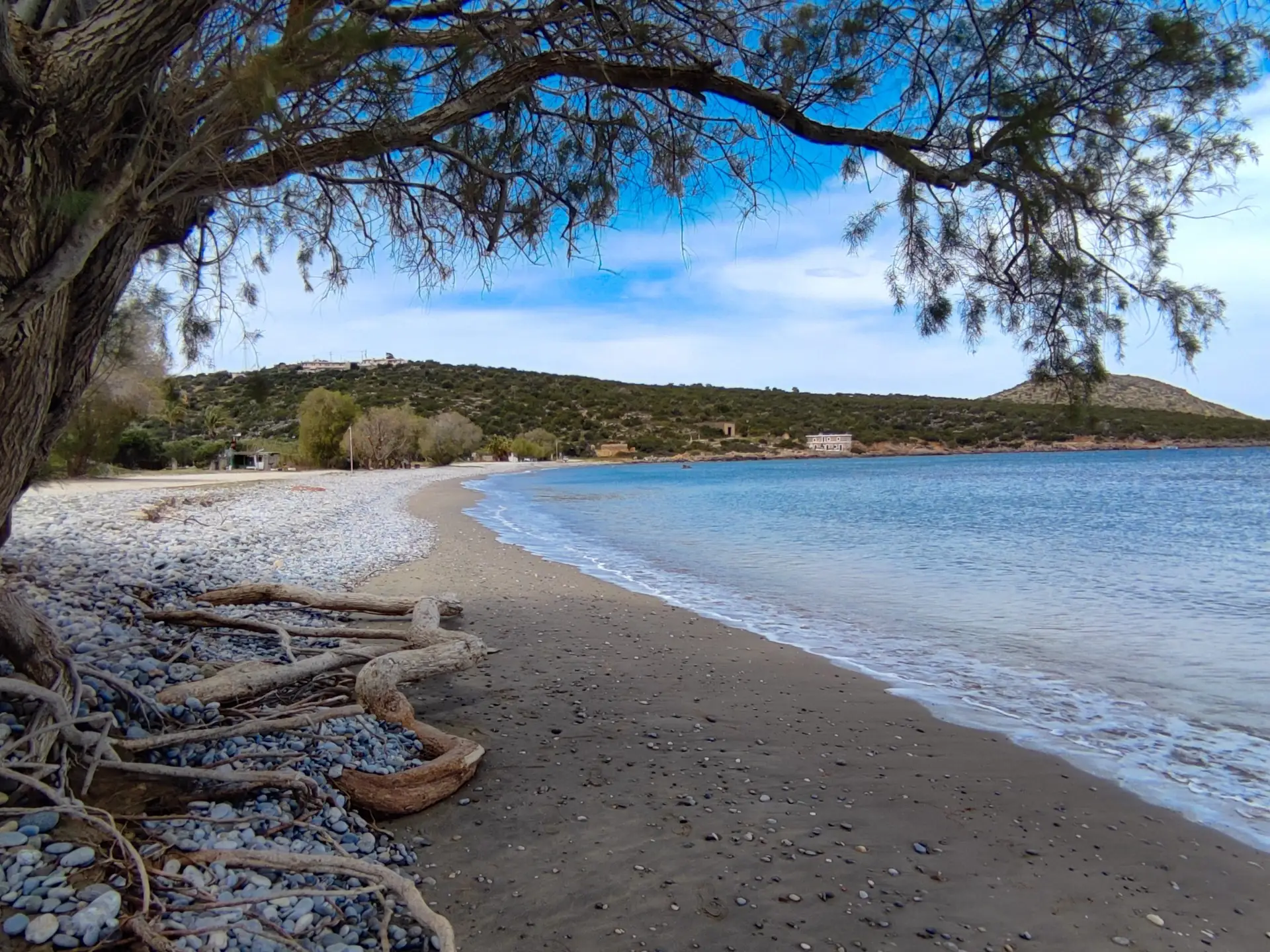
“Karavostasi stretches beneath the olive-covered slopes of Kalo Chorio.”
2. Chartalami or Chartalamis Kolympos
Chartalami is exactly the kind of beach that visitors can pass without noticing, even while travelling through the popular coastal zone of Kalo Chorio. It lies on a small peninsula covered with olive groves and is reached through dirt roads without clear tourist signage.
The beach is small and covered with pebbles. It is not the right choice for travellers looking for organised facilities, easy access to the sea or safe, shallow water. Its appeal is different: tranquillity, natural scenery and an interesting seabed when the sea is calm.
Because it faces a direction exposed to the summer northerly winds, choosing the right day is essential. In rough conditions, the location quickly loses its charm and is not worth the risk. During calm weather, however, it offers one of the most unusual swimming stops so close to Voulisma.
Local tip: Do not visit simply because the weather is sunny. Check both wind strength and direction. Natural shade is practically nonexistent, so an umbrella and sufficient water are essential.
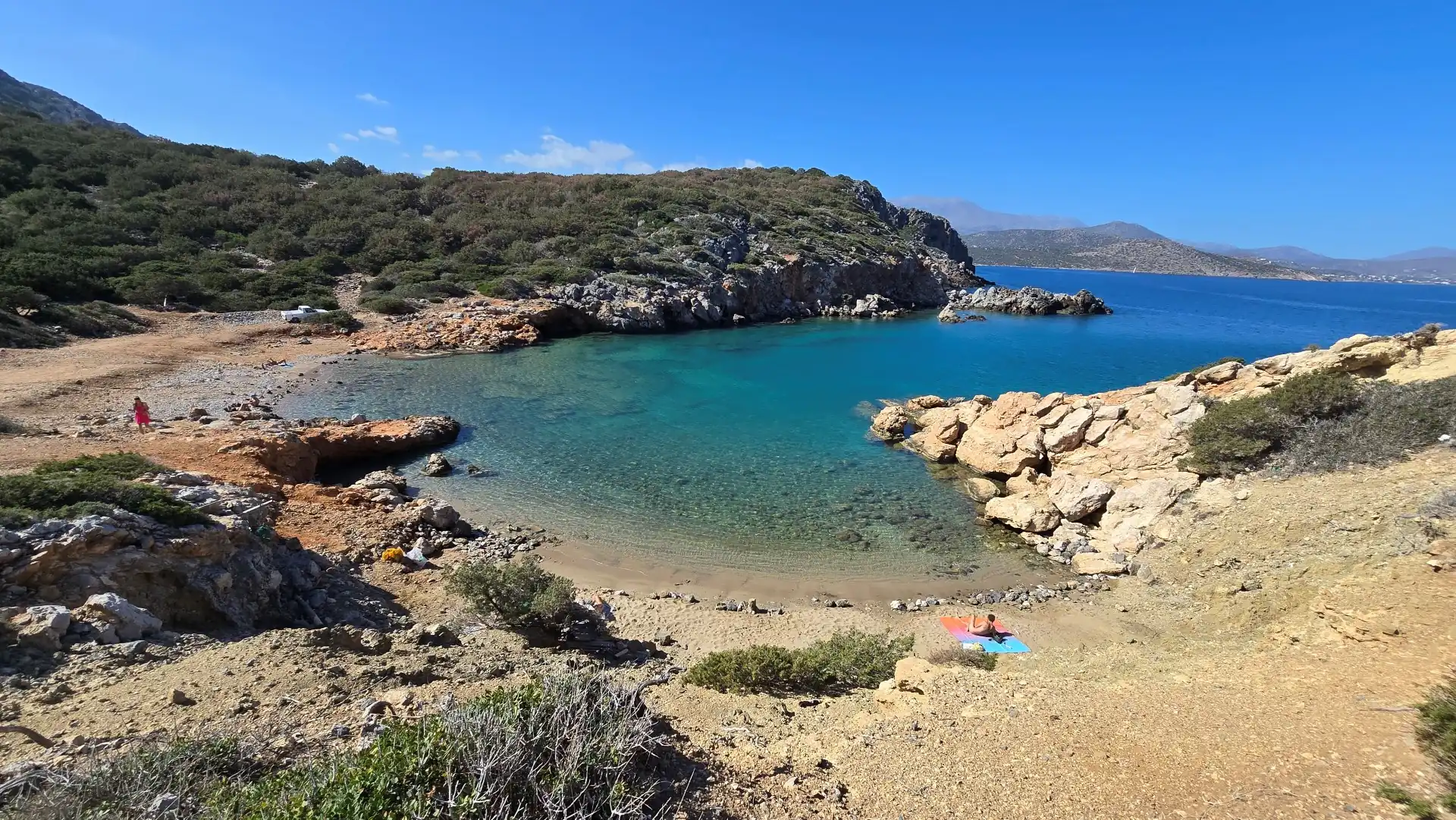
“The wider Istro coastline hides enclosed bays and steep shores that cannot be seen from the road.”
3. Vryonisi or Prasonisi
Vryonisi is not simply one beach but a small enclosed bay containing three tiny shores. Two can be reached by a path, while the third requires swimming. The descent passes through juniper trees and natural channels carved into the soft rock by flowing water.
The landscape is distinguished by pieces of white marble, colourful pebbles and unusual geological formations both above and below the water. This is more of a small exploratory excursion than a conventional day spent relaxing on a sun lounger.
Honesty is important, however. The coastline between Istro and Pachia Ammos can collect litter transported by marine currents. Conditions can change from one day to another. The beauty of the natural terrain remains, but visitors should be prepared for a wild coastline rather than a carefully maintained beach.
Local tip: Wear closed walking shoes during the descent and change into water shoes once you reach the shore. Avoid visiting with small children or during windy conditions.
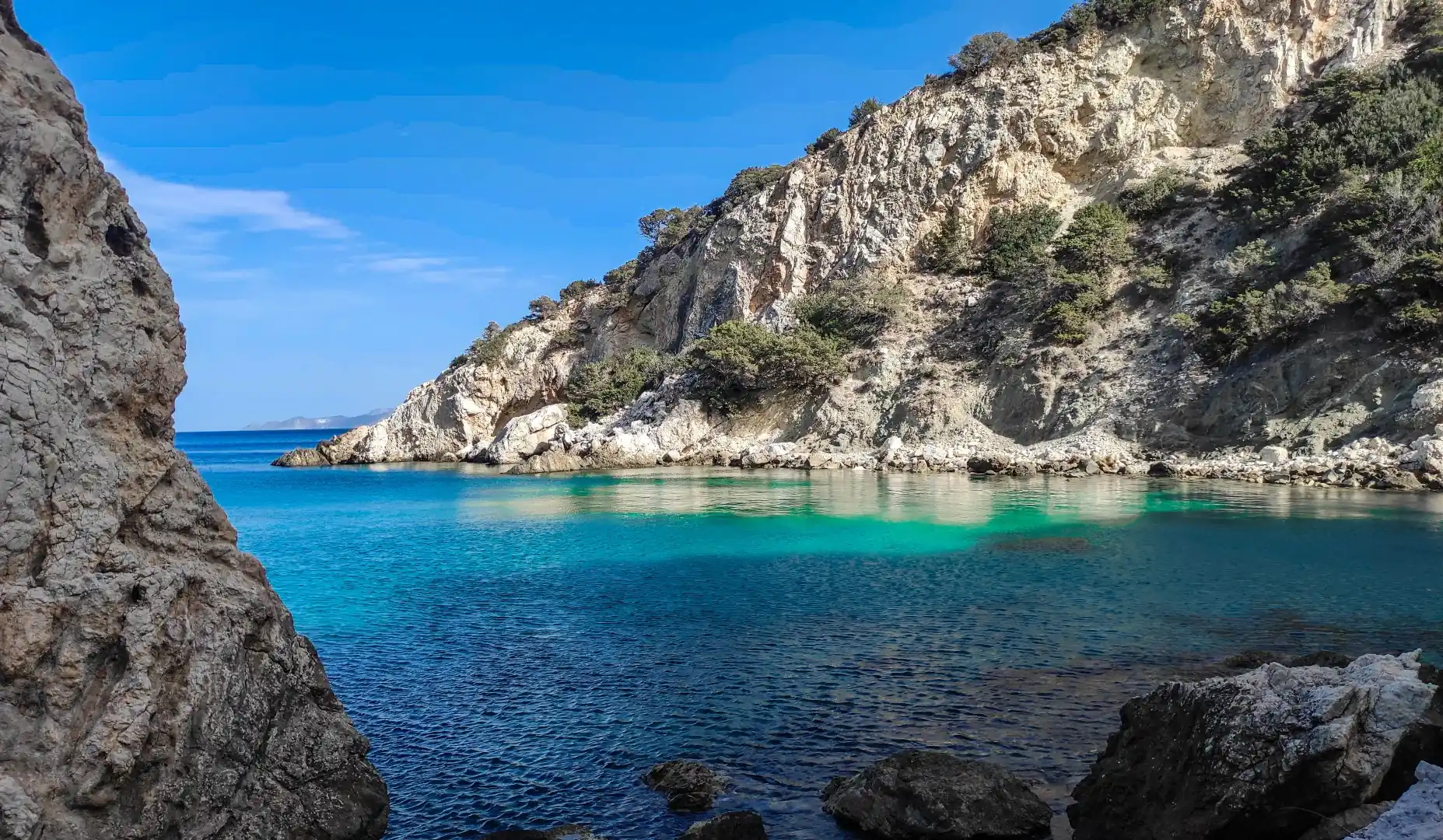
“Three tiny beaches inside an enclosed bay before Gournia.”
4. Kolokytha
Kolokytha can no longer be described as genuinely unknown. Nevertheless, the time of arrival can make the difference between a disappointing visit and an excellent one. Around midday, particularly in August or when excursion boats arrive, the small beach can become extremely crowded.
The journey is part of the experience. From Elounda, continue past the salt pans, the narrow canal and the old windmills. Then follow the dirt road across the peninsula and park near the small chapel of Agios Loukas. The beach is not visible from the parking area. It appears only after a short walk downhill.
Early in the morning, before the sand fills with visitors and while the surface of the water remains calm, the landscape justifies its reputation. Late in the afternoon, after most excursion boats have departed, the feeling of seclusion gradually returns.
Local tip: Aim to arrive before 09:30 or after 16:30. Do not rely on natural shade, and avoid blocking the narrow dirt road with careless parking.
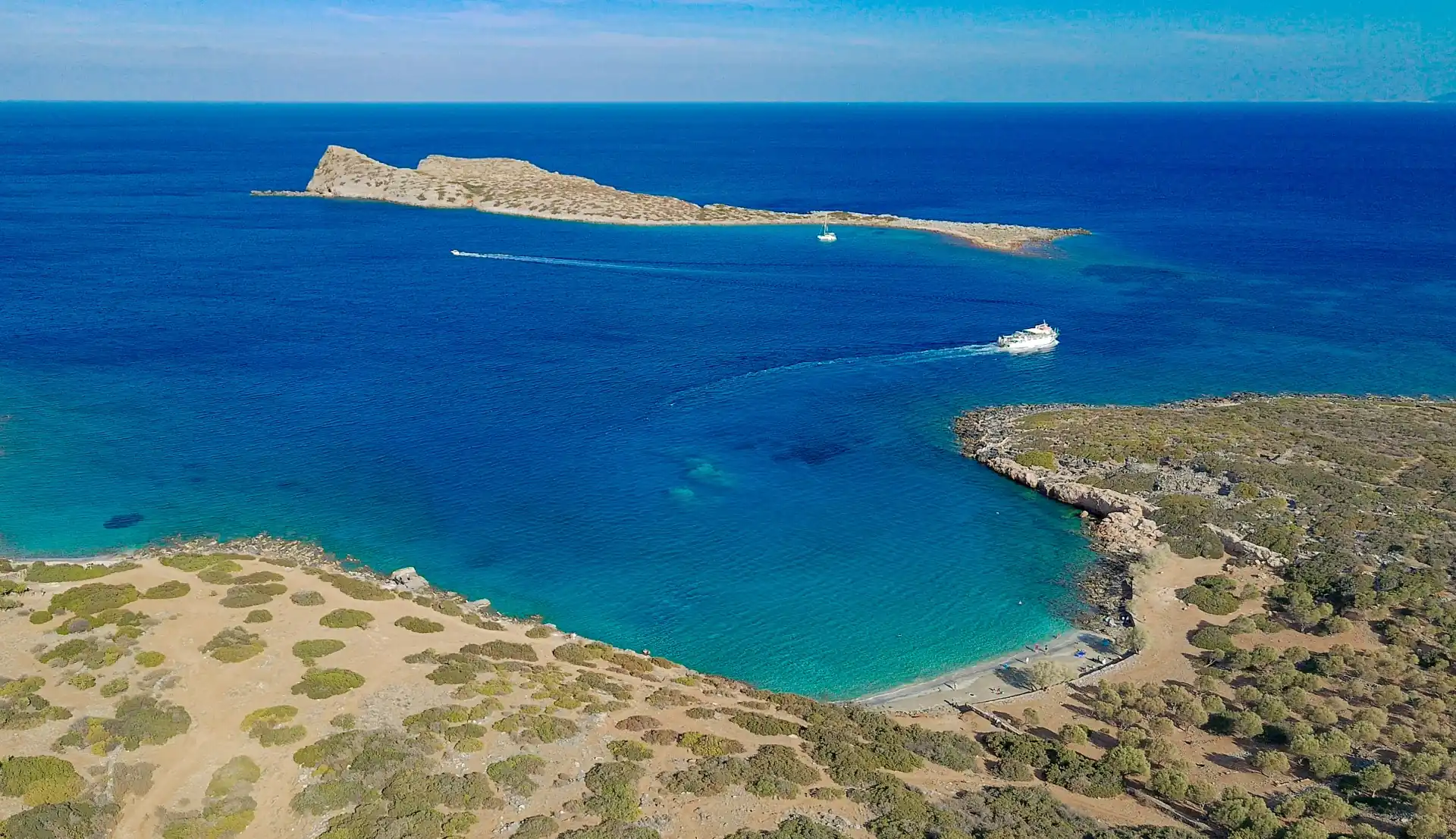
“Kolokytha is impressive, but the experience depends heavily on the time of your visit.”
5. Vagi on the Kolokytha Peninsula
Vagi lies on the same peninsula as Kolokytha, but it receives far fewer visitors because it is not suitable for a quick roadside stop. Reaching it requires walking, so the beach appeals primarily to travellers who value exploration more than convenience.
The water is usually calm, while the shoreline combines sand and rocky sections. Visitor numbers generally remain limited. Trees close to the shore provide some shade, although this does not guarantee that shaded space will still be available around midday.
Its main advantage is the opportunity to avoid the heavy flow of visitors at Kolokytha while remaining within the same impressive coastal landscape, opposite the small islets of Mirabello Bay.
Local tip: Download an offline map before setting off and allow enough time to return before dark. There are no places to purchase supplies along the route.
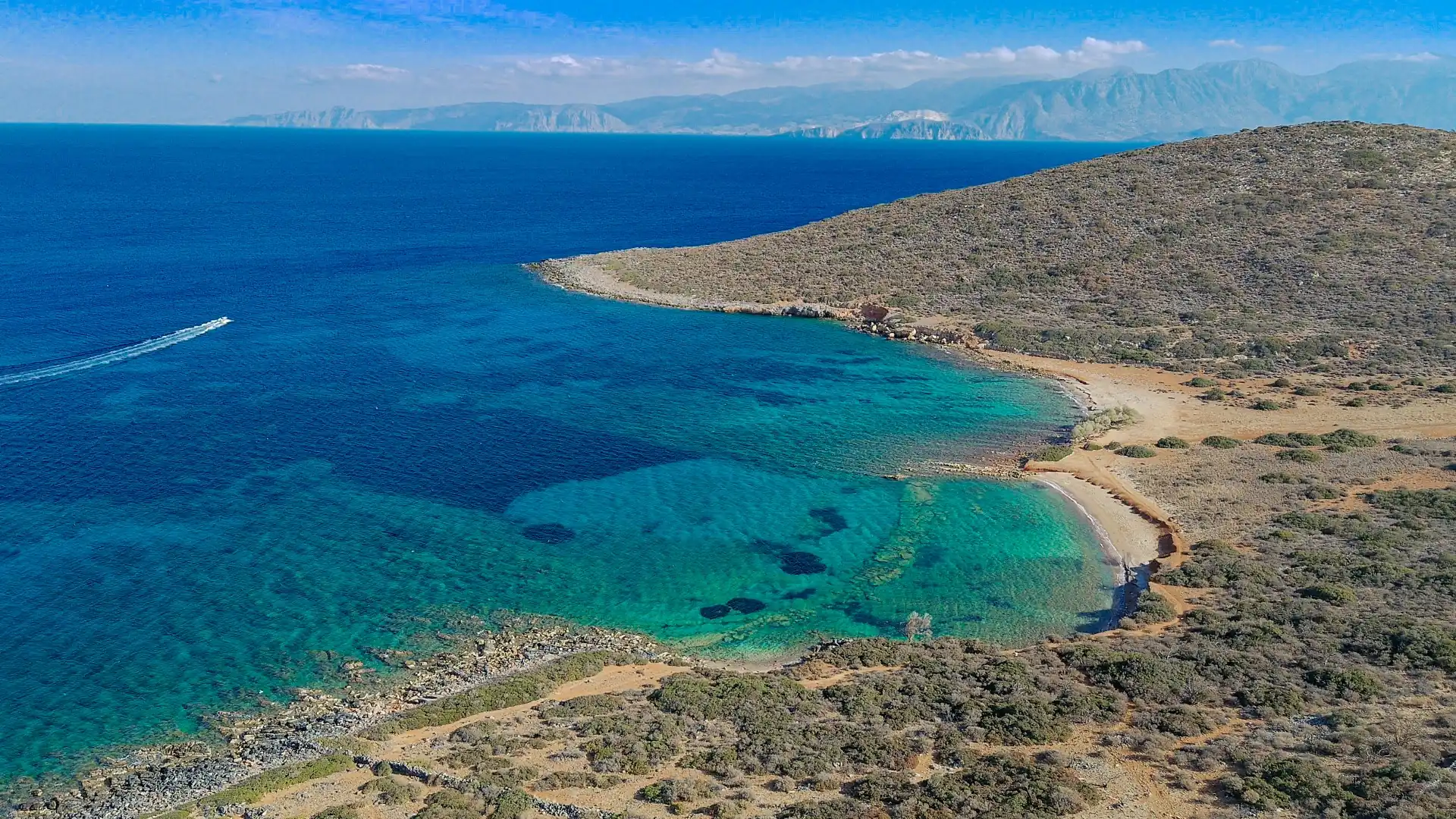
“The rocky coastline of the peninsula hides smaller beaches beyond the main shore of Kolokytha.”
6. Agriomandra
Agriomandra offers one of the most complete hidden-beach experiences in this guide: a route through agricultural countryside, a short gorge, small caves, an old chapel and a protected bay that remains hidden until the final steps of the walk.
The beach has pebbles and clear green water. The tall walls of the gorge provide protection, while tamarisk trees create natural shade. The seabed and rocky sides of the bay are excellent for snorkelling, provided that the sea is calm.
The location also has historical interest. It was used as a sheltered harbour during the Venetian period and until the early twentieth century, when the absence of roads made sea transport essential. Today, the ruins and stone-built chapel reinforce the sense that the beach lies outside the conventional tourist map.
Local tip: Arrive before the gorge becomes too hot and wear proper walking shoes along the route. Do not depend entirely on the shade of the tamarisk trees, as the available spaces are limited.
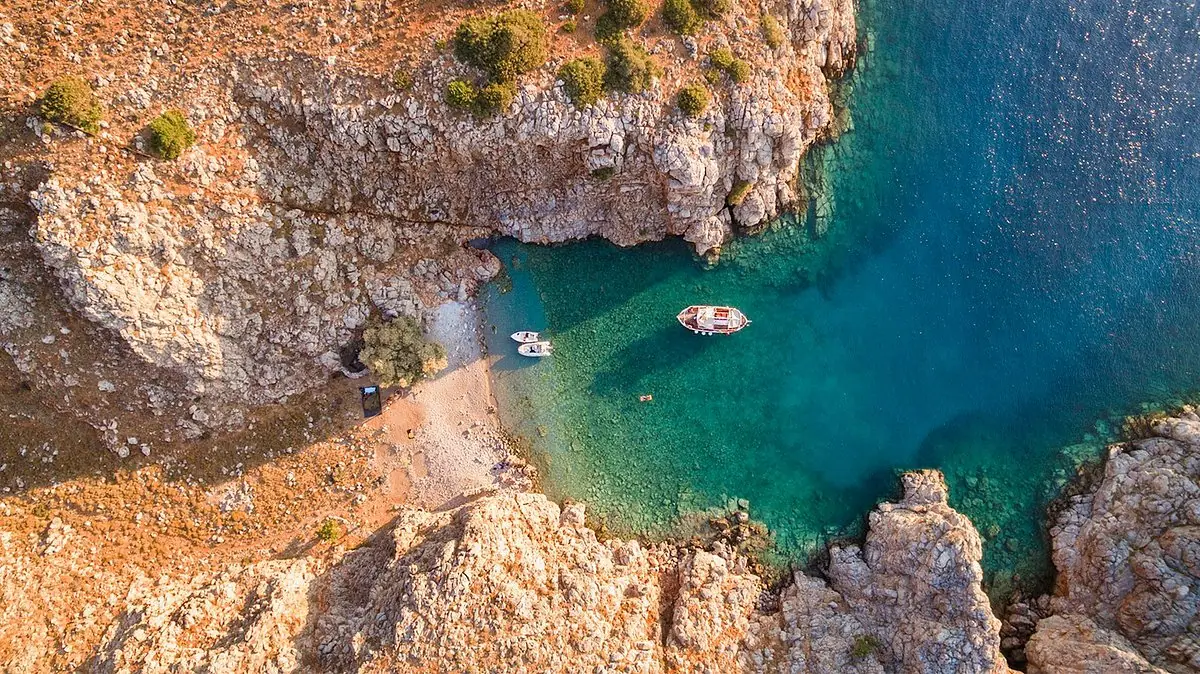
“A sheltered pebble bay at the end of a small gorge.”
7. Vlychadia, Avlaki and the Beaches of Kakia Naspa and Kouroukoulos
Vlychadia is more of a destination area than a single beach. The small coastal settlement is surrounded by rocky and pebbled coves, while the main shore is rugged and generally better suited to experienced swimmers, spearfishing and days with calm sea conditions.
At the western end of the road lies Avlaki, at the exit of the Skinia or Mavrogianni Gorge. It has white pebbles and exceptionally clear water when the sea is calm. Calm conditions, however, cannot be taken for granted along this exposed northern coastline.
From Avlaki, approximately 800 metres farther west, lie the beaches of Kakia Naspa and Kouroukoulos, which can be reached only on foot. The scenery is completely isolated, with gorges descending directly to the sea and even a small olive grove in an area without road access.
The long journey is more worthwhile when combined with the villages, monasteries and natural landscapes of Upper Mirabello. As a dedicated trip made only for swimming, it requires careful assessment of the weather.
Local tip: Plan a circular route through Neapoli and do not travel without a full fuel tank, sufficient water and an offline map. On the return journey, avoid unfamiliar dirt roads after sunset.
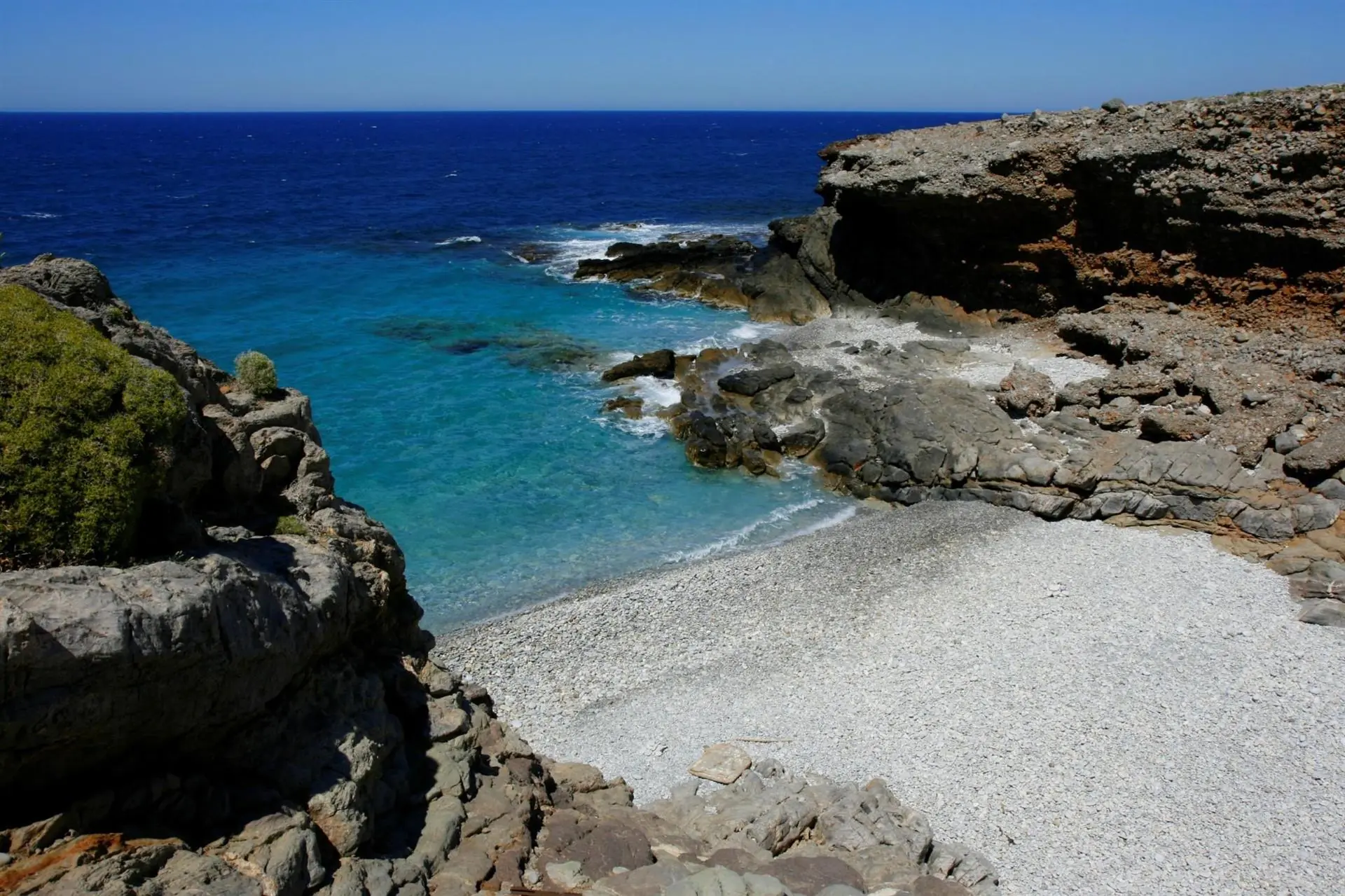
“An entire chain of wild coves along the northern coast of Mirabello.”
8. Skotini of Finokalias
Skotini lies in one of the most isolated and rugged areas of northern Crete. The small beach forms at the exit of the gorge of the same name, north of Finokalias, in a landscape of exposed rock, low vegetation, aromatic herbs, caves and old wells.
The route itself is one of the main reasons to visit. This is not a beach where you park beside the water. From Finokalias, follow the path towards the bed of the small gorge. An alternative approach begins near the pine-covered monastery of Agios Andreas and follows the coastline eastwards.
The isolation is genuine, and the responsibility of the visitor is therefore greater. Mobile reception may not be reliable everywhere, there are no services and you should not depend on other swimmers for assistance. Skotini is suitable for experienced hikers who want an authentic natural landscape, not for a quick swim between two scheduled activities.
Local tip: Inform someone about your planned route, start early, carry more water than you think you will need and never attempt the gorge after heavy rain.
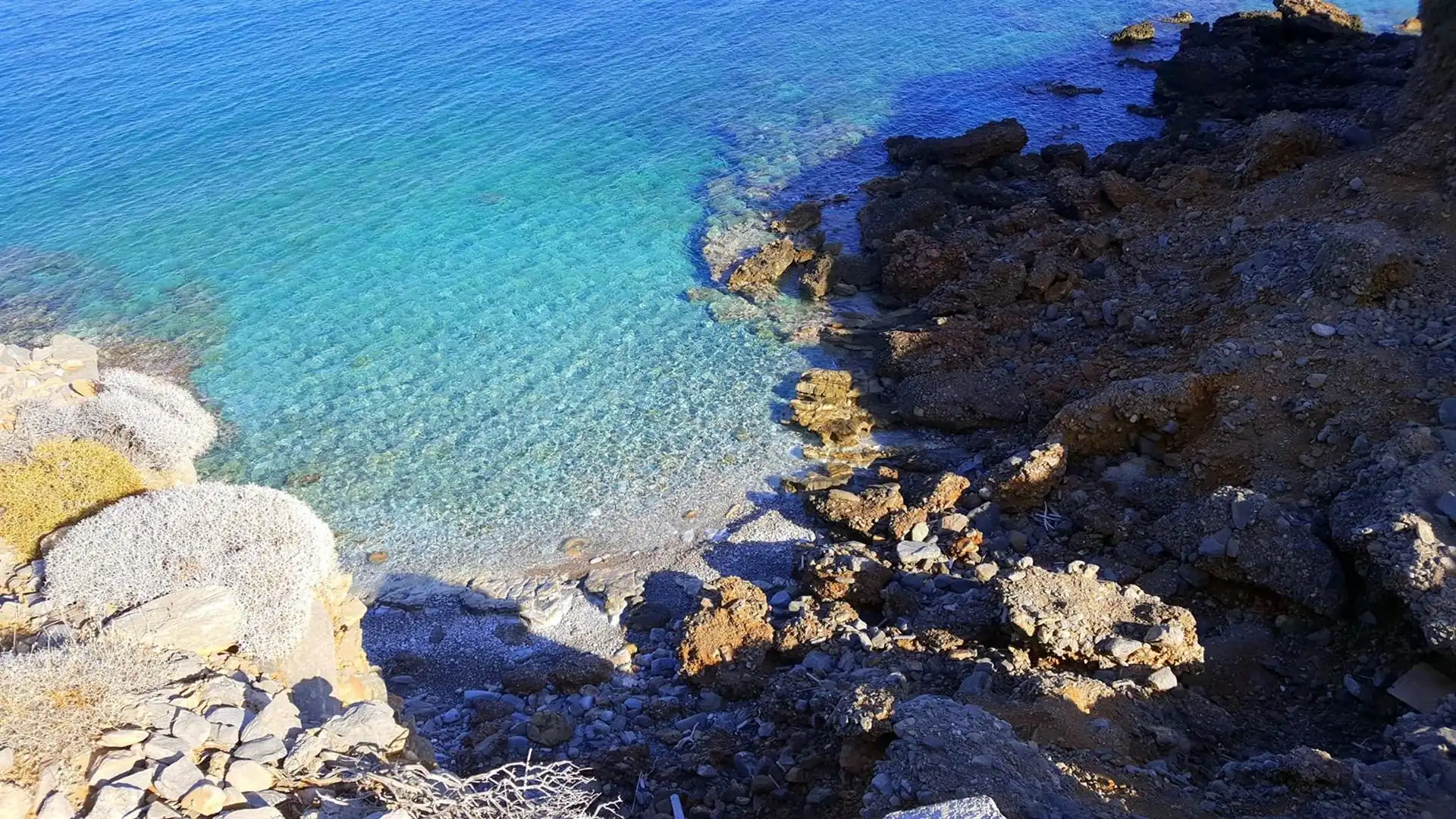
“The most isolated choice: a small beach at the exit of a wild gorge.”
How to Plan a Well-Organised Day Trip
Southern Route: Kalo Chorio. Begin with Karavostasi or Chartalami early in the morning, stop for views across the Bay of Istro and return through Kritsa. This is the shortest and most flexible route.
Northern Route: Elounda and Plaka. Visit Kolokytha or Vagi early, continue for a swim or a meal in Plaka and return through Elounda in the afternoon. Avoid Kolokytha during the main arrival times of excursion boats.
Eastern Route: Kavousi. Choose Agriomandra for a more active day or Tholos for an easier beach experience. Add a visit to Kavousi, the ancient olive tree of Azoria or a brief stop at a nearby archaeological site.
Upper Mirabello: Only in Good Weather. Lagkadaki, Vlychadia and Kato Selles work best as part of an exploratory driving route. Do not commit to a specific beach before seeing the actual sea conditions.
Frequently Asked Questions:
Which is the easiest hidden beach near Agios Nikolaos?
Karavostasi is one of the most practical options. It lies approximately 12 kilometres from the town, is reached by a paved road and offers natural shade from tamarisk trees. It is not completely isolated, but it is usually quieter than Voulisma.
Which beach is best for families?
Vathi offers the most protected water and a sandy shore, although access involves steps and the beach operates in connection with a hotel property. The isolated northern beaches are not suitable for young children.
Which beach is best for snorkelling?
Agriomandra combines a protected bay, rocky sides and clear water. Legameni and Avlaki are also good choices, but only during calm sea conditions.
Is a car necessary?
Yes. All options outside the town require a car, while several also involve a dirt road or walking route. A conventional car is sufficient for many routes when the road is dry and in good condition, but it should not be pushed along damaged or steep dirt tracks.
Are there canteens and toilets?
Usually not. Facilities are easier to find at Tholos, Plaka and the organised beach at Vathi. At the other locations, assume that no services are available.
What is the best time to visit?
For the southern and eastern beaches, early morning usually provides calmer conditions and easier parking. For Kolokytha, arrive before 09:30 or late in the afternoon. Along the northern coastline, wind strength is more important than the time of day.
Is it safe to visit alone?
Easier beaches such as Karavostasi and Tholos are more manageable. For Skotini, Agriomandra, Vryonisi or the isolated bays of Upper Mirabello, it is preferable to travel with company and inform a third person about your plans.
Why do some remote beaches have litter?
Marine currents can transport plastic and other waste over long distances. Isolation does not guarantee a clean shoreline, particularly in enclosed coves between Istro and Pachia Ammos and along exposed northern coasts.
The Most Beautiful Beach Is the One That Suits the Conditions of the Day
The hidden beaches near Agios Nikolaos are not all easy to reach, and they are not all photogenic every day. The quality of the experience depends on the wind, access conditions, the time of arrival and the actual needs of your group.
For a family, the protected beach at Vathi may be a better choice than a spectacular but difficult cove. For an experienced hiker, Skotini or Agriomandra may offer exactly the sense of exploration they are looking for.
The greatest advantage of Agios Nikolaos is its variety. Within one hour, you can move from organised sandy beaches to pebbled bays, peninsulas, gorges and small coastal harbours. There is no need to pursue a “secret” beach at any cost. What matters is choosing the right location for the right day.
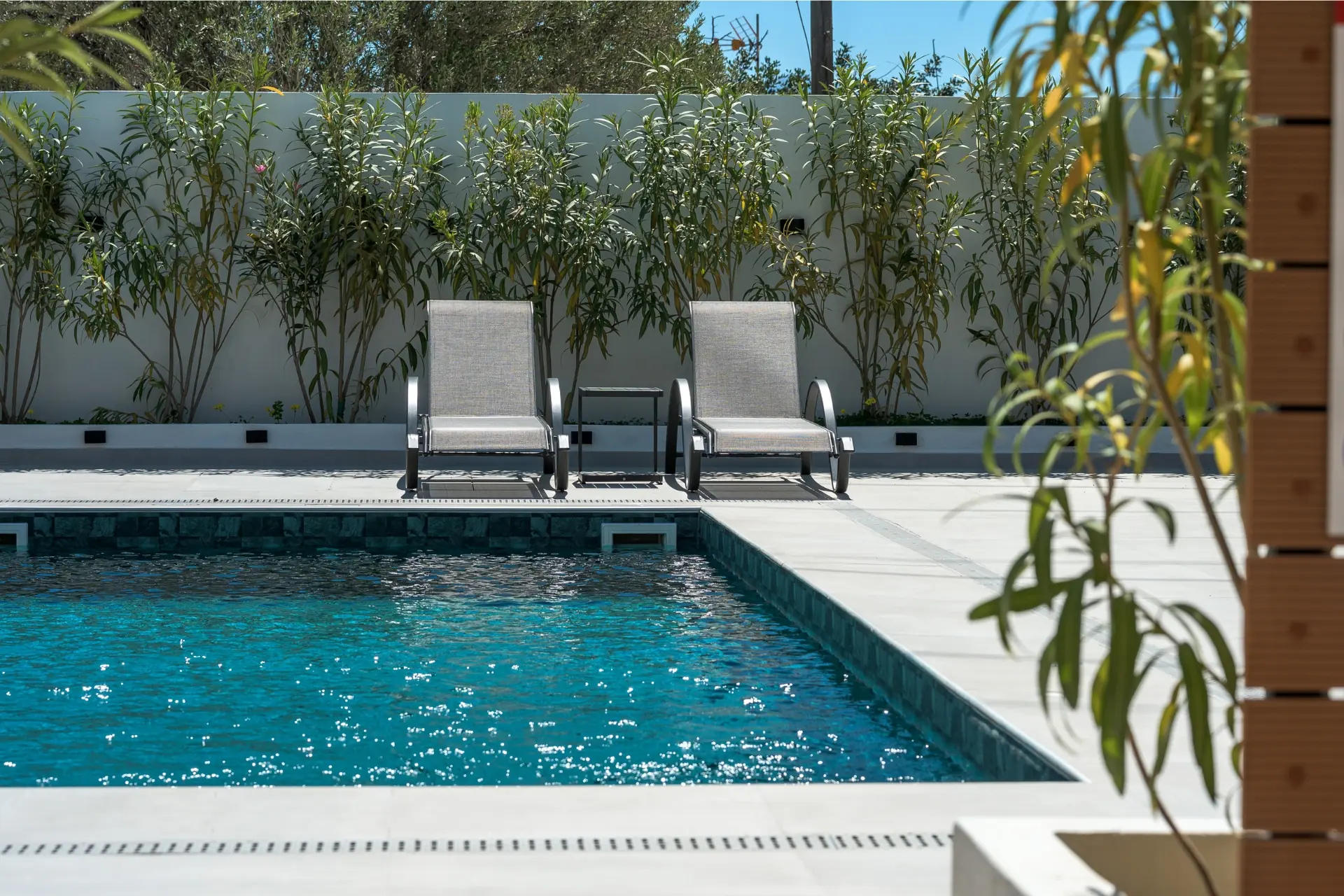
Ria Oasis Residence provides a comfortable base near Agios Nikolaos for exploring the beaches and landscapes of Eastern Crete. With a private pool, three bedrooms, two bathrooms, fully equipped indoor and outdoor living areas, private parking and fast Starlink internet, it allows families, couples and groups of friends to combine discovery with genuine comfort after returning from their excursions.
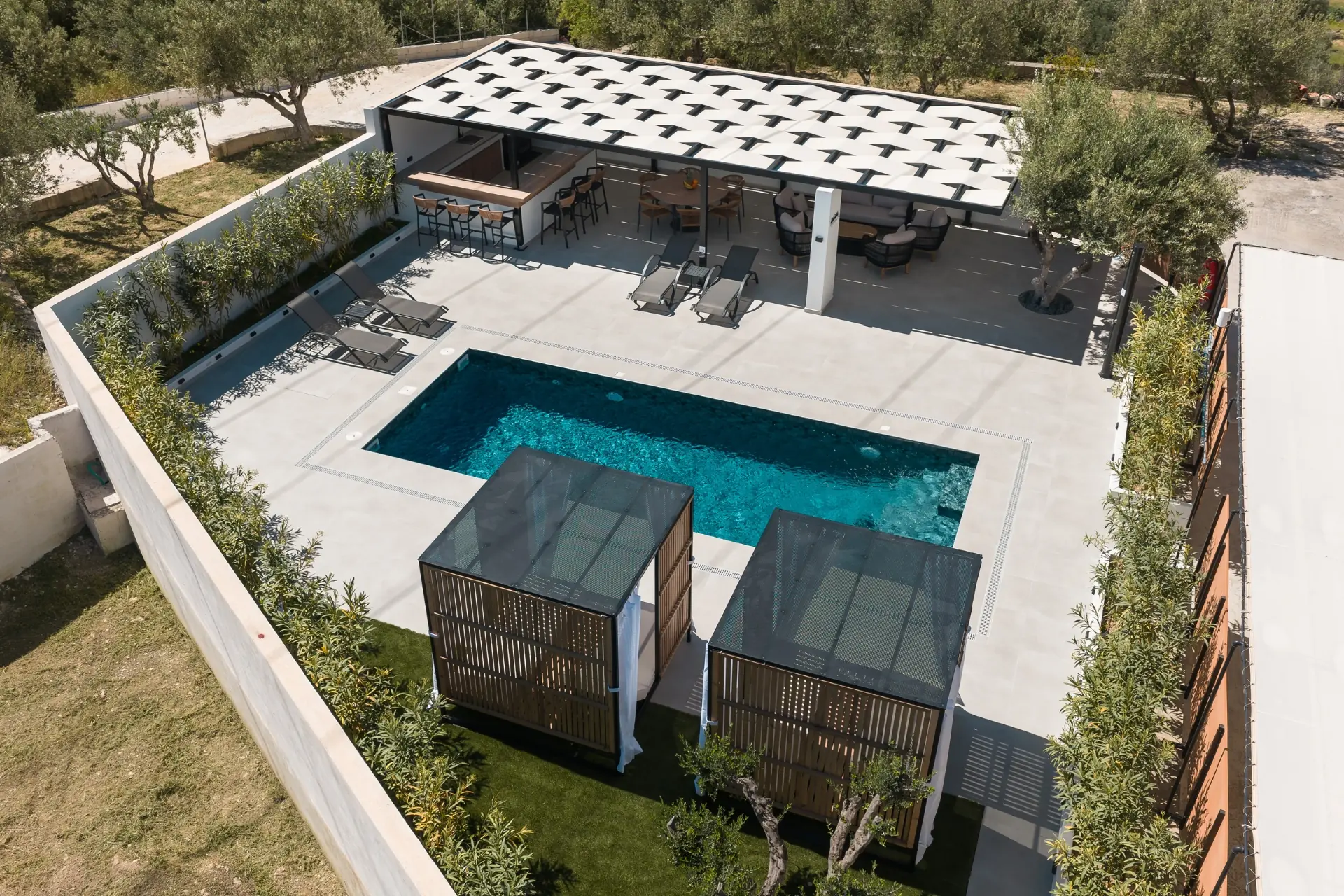
 Private Pool
  Pool Bar & BBQ Area
  3 Bedrooms
  Up to 7 Guests +
  +2 Infants (0-2 yrs)
  2 Sofa Beds